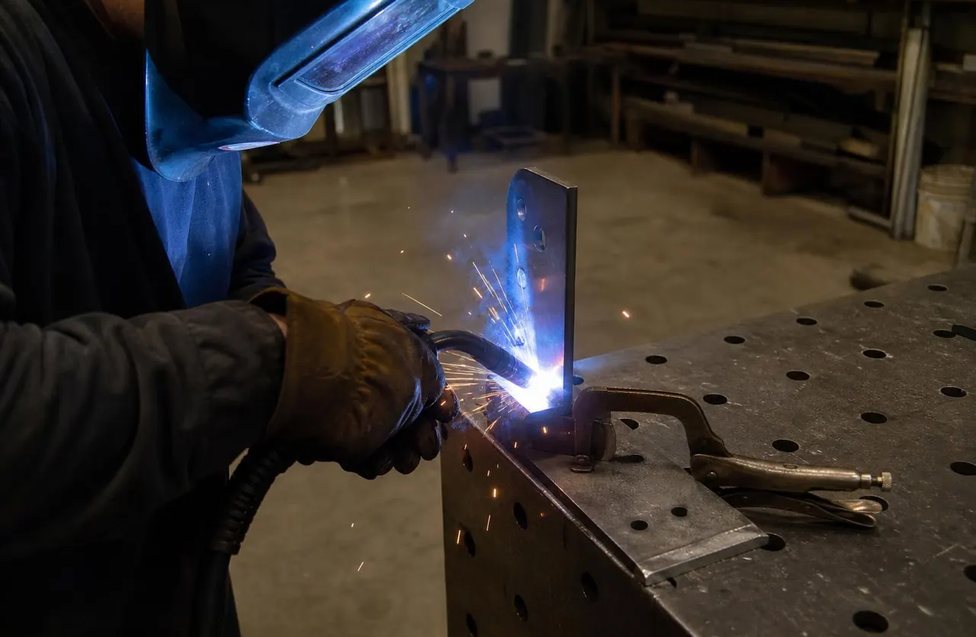
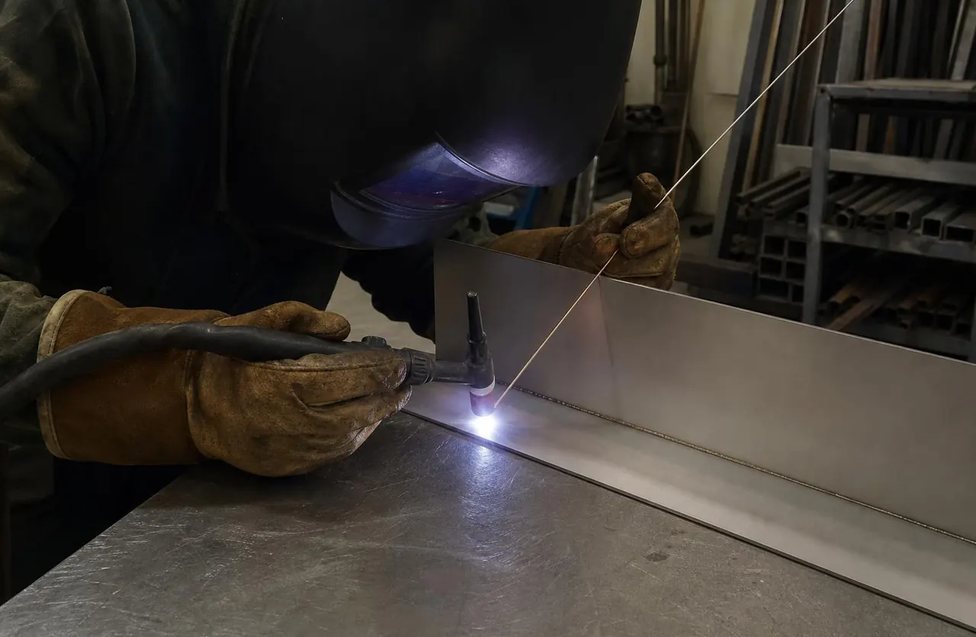
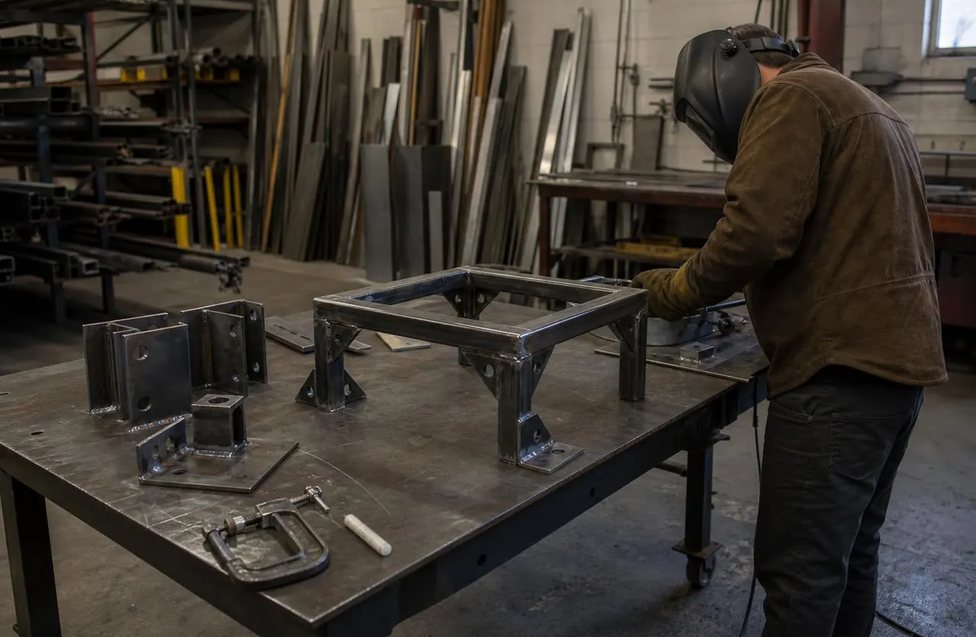
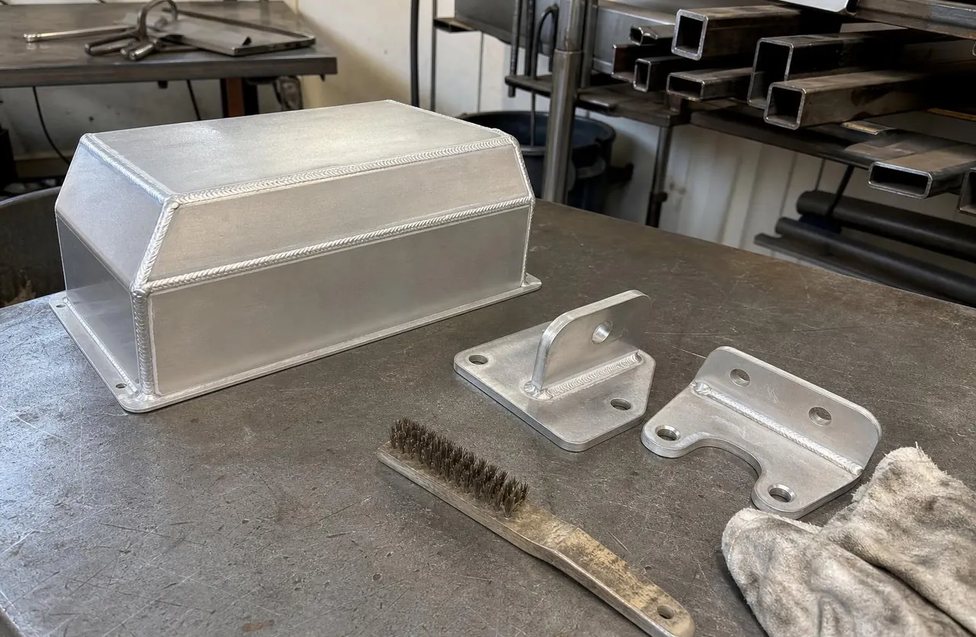
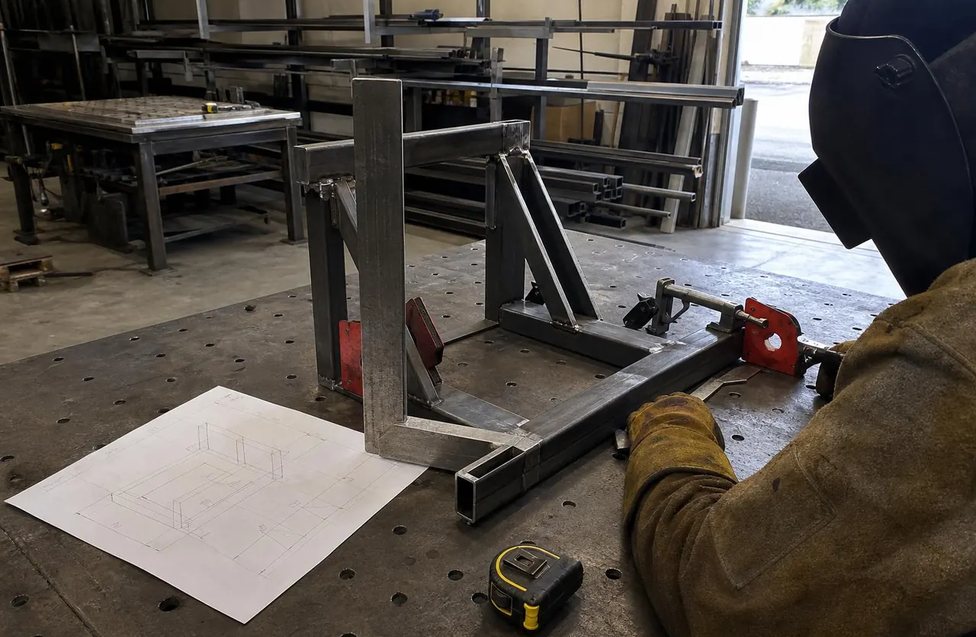
Every part in our shop is joined by one of two arc processes: MIG or TIG. The process decides how heat goes into the joint, how fast the weld goes down and what the bead looks like when it is done. The material, mostly steel or aluminum, decides how much heat the part can take and how it has to be cleaned. Custom work combines both choices for a part that starts from a drawing or sample.
This page gives you a short map of the five ways we work, so you can point us in the right direction when you send a request. You do not need to choose the process yourself. If you tick not sure on the form, we pick it after we review the part and explain why in the quote.
MIG or TIG
The two processes side by side
In words, not numbers. Each row is a tendency, and the part in front of us always has the final say.
We start with thickness. Thin sheet and small parts lean toward TIG, where heat can be eased off at the edge. Thicker parts, long seams and frames lean toward MIG, which puts down metal steadily without the welder stopping. Then we look at appearance: if a joint sits on the outside of a cover or a panel that people see, TIG often gives a cleaner result with less grinding.
Quantity matters too. For a run of matching brackets, MIG with a simple jig keeps every part alike and keeps the job moving. For one prototype with mixed thicknesses, we may use both processes on the same part. Whatever we choose, the quote says so in plain words.
Bead simulator
Why we set the machine to the part
Two things shape every weld bead: how much heat goes in and how fast the torch travels along the joint. Move the sliders to see what happens to the bead. The words are deliberate; real settings depend on the metal, its thickness and the joint.
slowmediumfast
lowmediumhigh
Bead shape
Even
Heat and travel speed in balance. The bead flows into both edges with a smooth, even ripple and a slight crown.
Where it fits:The target for most brackets, frames and mounts. This is where we aim when we set up a batch.
Top view of the bead
weld metal
fusion into the part
Not sure which process fits?
Tick not sure on the form. We choose after we review the drawing or sample and explain the choice in the quote.
Cookies. A few necessary cookies keep this website working and secure. You decide whether optional analytics and advertising cookies may be used. Cookie Policy
Cookie Preferences
Pick the optional cookies you are happy with. We remember your choice for 180 days. If your browser sends a Global Privacy Control signal, optional cookies stay off.
EssentialAlways on
Keep the site working and secure and remember your cookie choice.
Count page visits in general terms. Stays off unless you switch it on.
Tell us if an advertisement brought in a quote request. Off by default.
A Global Privacy Control signal was detected, so optional cookies remain off.